Do Gutter Guards Actually Work in Minnesota?
2026-08-13 · Gutter Protection
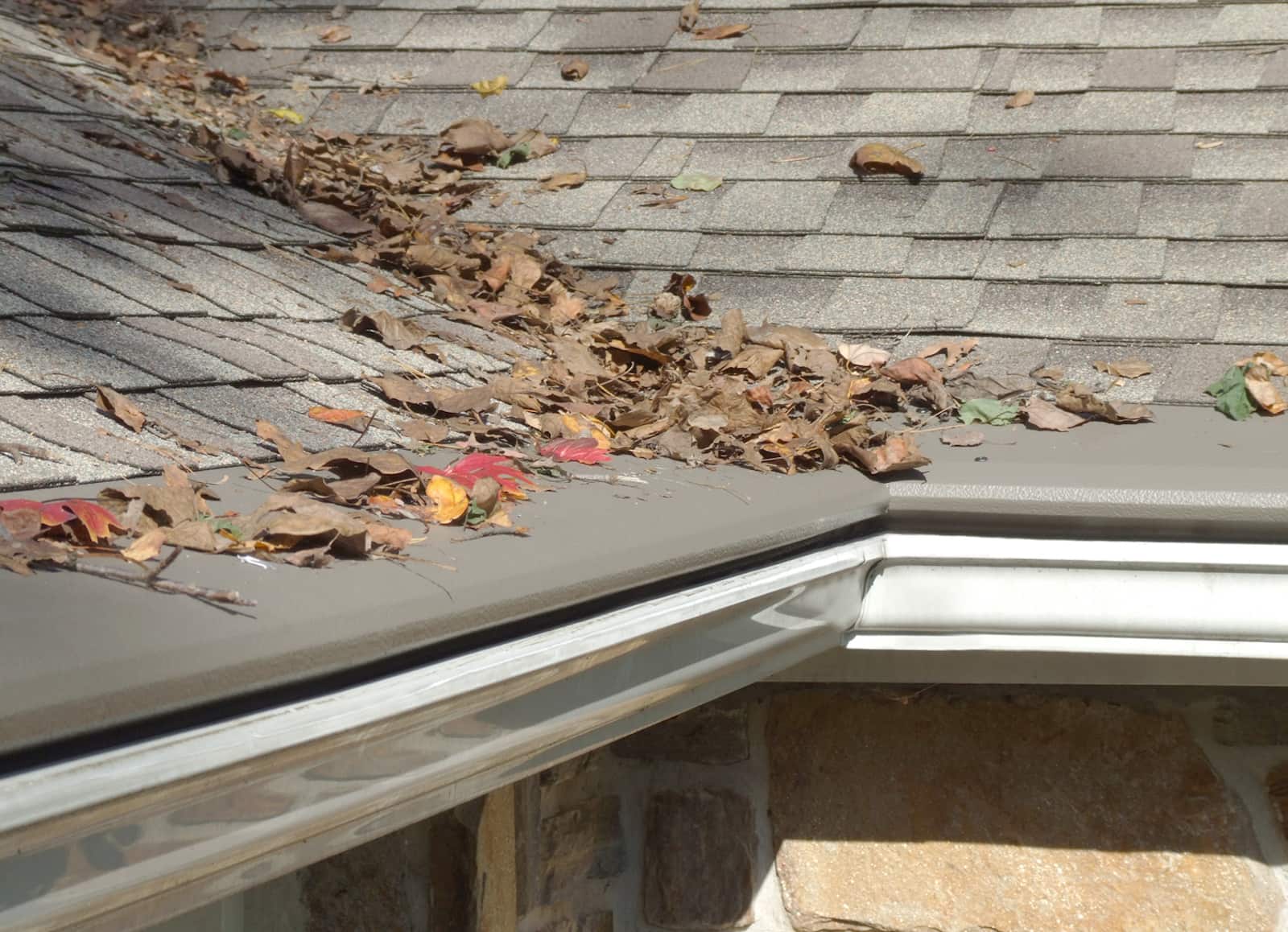
Do gutter guards work in Minnesota? Yes, but only the right type. A solid surface-tension cover holds up in freeze-thaw where mesh, screen, and foam fail.
You are trying to decide whether gutter guards are worth buying before you call anyone, and you want a straight answer, not a sales pitch. Here it is: gutter guards work, but only the right kind, and the kind that works in Minnesota is not the kind that tops most "best of" lists. The verdict our W-2 crews have reached after installing gutter protection across the Twin Cities metro since 2001, with more than 45,000 customers served, is simple. A guard with openings, screen, mesh, micro-mesh, or foam, eventually loses to our fine debris and freeze-thaw cycling. A solid surface-tension cover with no openings does not, because there is nothing to clog and nothing to hold ice at the eave. That is the whole answer, and the rest of this page shows the reasoning so you can judge it for your own roof.
<aside class="my-6 rounded-md border border-border bg-accent p-4 text-sm"><strong>The honest version:</strong> "Do gutter guards work" is the wrong question for Minnesota. The right one is "which type survives snow load and freeze-thaw," and that reshuffles every national ranking. If guards work, which one wins here? See our side-by-side of the best guards for a Minnesota winter.</aside>
Do Gutter Guards Work?
Yes, the right type does. A gutter guard's job is to keep leaves, seed, and needles out of the trough so water drains and never backs up. The type decides whether it holds. Screen, mesh, and micro-mesh guards filter water through openings, and in a heavy-canopy freeze-thaw climate those openings clog or glaze over, then trapped debris anchors ice at the cold edge of your roof. A solid surface-tension cover has no openings at all. Water clings to the curved nose-forward edge and follows it into the gutter while debris slides off the front to the ground, so it works where the filtering guards fail.
<blockquote class="my-6 border-l-4 border-primary pl-4 italic text-foreground/85">"The homes that struggle most with ice dams are almost always the ones running a screen or micro-mesh guard that clogged by November. The debris is what feeds the dam, and a guard with holes just holds the debris up where the ice can grab it."</blockquote>
That pattern is the reason we settled on a solid panel. A Gutter Helmet surface-tension cover is a patented, nose-forward, bull-nose design mounted under your existing shingles at the same pitch as the roof, with no holes, slots, or screens for debris to clog. It is rated to handle over 22 inches of rain per hour, far more than any Minnesota downpour delivers, and it carries a Triple Lifetime Warranty and a lifetime no-clog guarantee: if your gutters ever clog after installation, we clean them for free. Want your own roofline looked at? Call 612-509-5693 for a free in-home estimate.
Are Gutter Guards Worth It?
For most Minnesota homes under real tree canopy, yes, and the math is easy to explain without inventing numbers. A clogged, overflowing gutter in a freeze-thaw climate feeds an ice dam at the cold eave. That dam backs water under the shingles and into the fascia, soffits, and the foundation below, and repairing that water damage costs far more than any guard ever did. A guard that actually keeps the gutter clear breaks that chain, and a permanent solid cover means you are never on a ladder again either.
Here is who genuinely gets their money's worth:
- Homes under mature elm, oak, cottonwood, and maple canopy that drop a heavy debris load twice a year
- Lakeside and river-corridor lots near the Chain of Lakes, Lake Minnetonka, and the Mississippi and Rum river corridors, where pine-needle load is constant
- Two-story homes where seasonal gutter cleaning means a tall ladder and real risk
- Homes that have already had an ice dam force water back under the shingles once
<aside class="my-6 rounded-md border border-border bg-accent p-4 text-sm"><strong>Buy-once framing:</strong> The value is not the guard, it is the water damage you never pay to repair. In a freeze-thaw climate, keeping water moving away from the fascia and foundation is the whole return.</aside>
When a gutter guard is NOT worth it yet
We will say the part that might cost us the sale. If your home sits on a clean, open lot in a newer subdivision like Woodbury, Rosemount, or Maple Grove, with young landscaping, no overhanging trees, and no history of clogging or ice dams, you may not need a guard at all right now. Not every roof needs a permanent system. If your only debris is a stray maple leaf a few times a year, do not let anyone, including us, talk you into more than your roofline calls for. Keep an eye on it as the landscaping matures. A measured look is the only honest way to know for sure.
What Is the Best Gutter Guard That Actually Works Here?
For a Minnesota winter, the best gutter guard that actually works is the one with no openings to clog and no flat surface for wet snow to load on. That is a solid surface-tension cover, and it is a different category from any screen. This is not a marketing line, it is what our crews confirm on tear-off after tear-off across the western and northwestern suburbs, pulling failed micro-mesh and screen guards off rooflines every spring. The very fineness that lets a micro-mesh guard win a national review is what glazes over with cottonwood seed and pollen here, and once the surface clogs, water sheets off instead of draining.
The deciding test in this climate is not fair-weather leaf filtering. It is whether the guard sheds a wet spring snowpack and freeze-thaw ice, or holds them. A solid panel sheds snow the same way your shingles do, so nothing loads on top and nothing gets inside to freeze. If you want the full head-to-head against every guard type, our page on the best gutter guards for Minnesota lays it out roofline by roofline. Ready to compare on your own house? Talk to our team at 612-509-5693.
Why the Minnesota Climate Decides the Verdict
Most gutter guard reviews are written for a mild-climate reader who never watches a panel glaze over with ice in a January cold snap. In the Twin Cities, that is the wrong lens. Our guards spend December through March under snow, not leaves, and a metro roofline can swing from a sunny 35-degree afternoon to a sub-zero night dozens of times a season. Every swing is a chance for trapped water to expand into ice and pry a guard loose or split a seam.
<blockquote class="my-6 border-l-4 border-primary pl-4 italic text-foreground/85">"We stopped judging guards by how fine the mesh is years ago. Out here the real question is what happens when a foot of wet snow sits on it for a week and then the temperature swings 40 degrees. That is the test that reshuffles every ranking."</blockquote>
Every installation is performed by W-2 employees of Gutter Helmet of Minnesota, never subcontractors, and includes a full inspection and tune-up of your existing gutter system before panels go on. On the worst ice-dam-prone eaves, the north-facing edges and long shaded runs, we can add Helmet Heat along the leading edge of the panel, always as an add-on to a Gutter Helmet installation and never as a stand-alone retrofit to bare gutters. It is a low-voltage, self-regulating heated cable that helps prevent the debris buildup that contributes to ice dams.
How We Check Whether a Guard Will Work on Your Roof
We keep this straightforward, and we will show you the real trade-offs rather than steer you.
- You request a free in-home estimate. No charge, no obligation.
- We inspect and measure. We look at your roofline, your tree canopy, the eaves that hold snow longest, and where any ice dams have formed before, then explain which guard types would and would not survive your winters.
- You get a plan in writing. We lay out the solid Gutter Helmet system, the optional Helmet Heat cable for problem eaves, financing, and current promotions, all in plain language.
- We install. Every installation is performed by our W-2 crews, never subcontractors, and a project is typically completed in one day on an average-sized home.
We have been doing this as a family-owned company since 2001. When you call, you are talking to the people who will actually be at your house. Ask about our current 15-Months-No-Interest financing and save-up-to-30% offer, plus Seniors and Military Veterans discounts, when you book. To get started, call 612-509-5693 or request a free in-home estimate.
Frequently Asked Questions
Do gutter guards work in winter snow?
A solid, roof-pitched surface-tension cover does, and flat or perforated guards generally do not. In snow and ice the deciding factors are whether snow slides off the guard or loads on top of it, and whether meltwater can refreeze inside. Screens and mesh give wet snow a flat surface to pile on and openings for ice to form in, so they clog and can sag or collapse, while foam soaks up water and freezes into an expanding block that splits gutter seams. A solid Gutter Helmet cover sheds wet snow the same way your shingles do and keeps the gutter clear underneath, which is why it holds up through a Minnesota winter. The honest way to judge it for your roof is a free in-home estimate.
Do gutter guards actually work, or are they a gimmick?
The cheap, gimmicky ones give the category a bad name, but a properly engineered guard absolutely works. The difference is the mechanism. A guard that filters water through openings will eventually clog with fine debris and, in a freeze-thaw climate, hold ice at the eave. A solid surface-tension cover carries water around a curved nose-forward edge with no openings at all, so there is nothing to clog. That is the design we install and back with a Triple Lifetime Warranty and a lifetime no-clog guarantee.
Are gutter guards worth it in Minnesota?
For most homes with tree canopy or a history of ice dams, yes. The value is not the guard itself, it is the water damage you never pay to repair when clogged gutters stop feeding ice dams that back water into your fascia, soffits, and foundation. A permanent solid cover also means you are never cleaning gutters from a ladder again. If you are on a clean, open lot with no overhanging trees and no clogging history, you may not need one yet. A free in-home estimate is the honest way to know.
What is the best gutter guard that actually works in a freeze-thaw climate?
A solid surface-tension cover with no openings to clog and no flat surface for snow to load on. Micro-mesh often tops national reviews, but its fine weave glazes over with cottonwood seed and pollen here and sheets water off in freeze-thaw. The category that wins a Minnesota winter is the one without a screen, because there is no mesh to blind and no opening to freeze. See the full comparison on our best gutter guards for Minnesota page, then get your roofline measured with a free in-home estimate; call 612-509-5693.